
Five Skirts, Five Construction Principles
The foundation is not the final design. It is the technical structure that makes it possible.

Everything begins with a foundation
When looking at a finished garment, it is often difficult to imagine the technical process that made it possible.
We see a silhouette, a volume, a movement. We recognise a shape, but not necessarily the construction that supports it.
Yet behind a complex pattern lies a succession of technical decisions that begins with an understanding of the fundamental structures.
In patternmaking, a foundation is not simply an elementary shape to reproduce. It is a construction reference through which to understand proportions, measurements, fit and the distribution of volume.
It is the starting point for reasoning.
Because a correctly constructed foundation does not limit creativity. On the contrary, it makes it possible to develop it.
Five constructions, five ways of thinking about shape
The skirt is one of the garments through which this principle can be observed particularly clearly.
The basic skirt block, pencil skirt, full circle skirt, half-circle skirt and quarter-circle skirt represent five essential constructions.
They are not merely five different silhouettes.
Each introduces a specific relationship between the body, geometry, fullness and fabric behaviour.
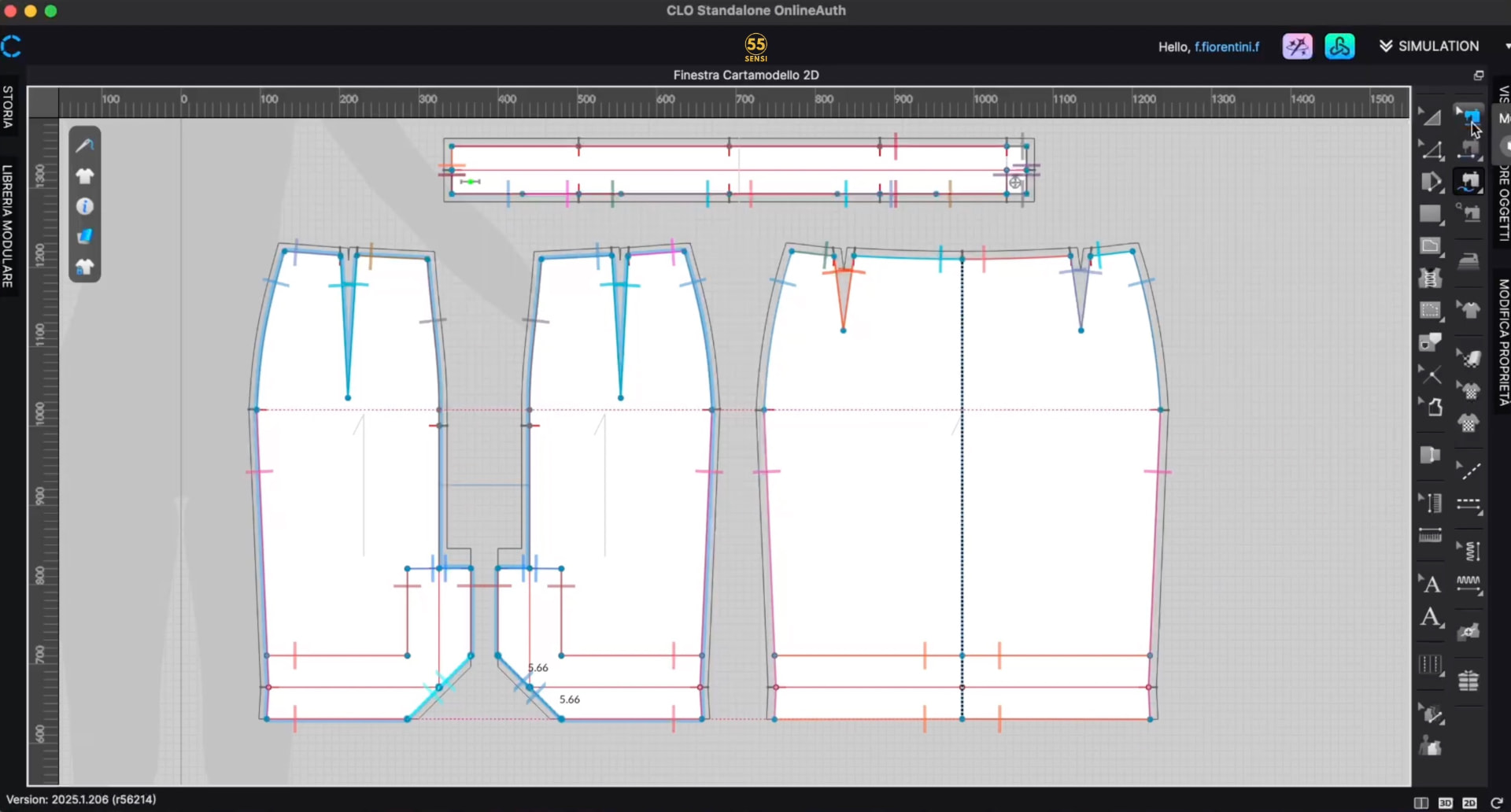
In the basic skirt block, working with measurements and darts establishes the relationship between the waist, hips and the line of the garment.
In the pencil skirt, controlling the silhouette requires particular attention to reducing fullness and preserving freedom of movement.
In full circle, half-circle and quarter-circle constructions, geometry becomes a tool for determining fullness and the distribution of volume.
The shapes change, but above all, the technical problems to be solved change.
Understanding these differences means beginning to recognise which construction may provide the most suitable reference for a particular project.
Transformation is not an arbitrary act
Imagine a skirt with an apparently simple construction.
Its line is clean, its volume controlled, its structure legible.
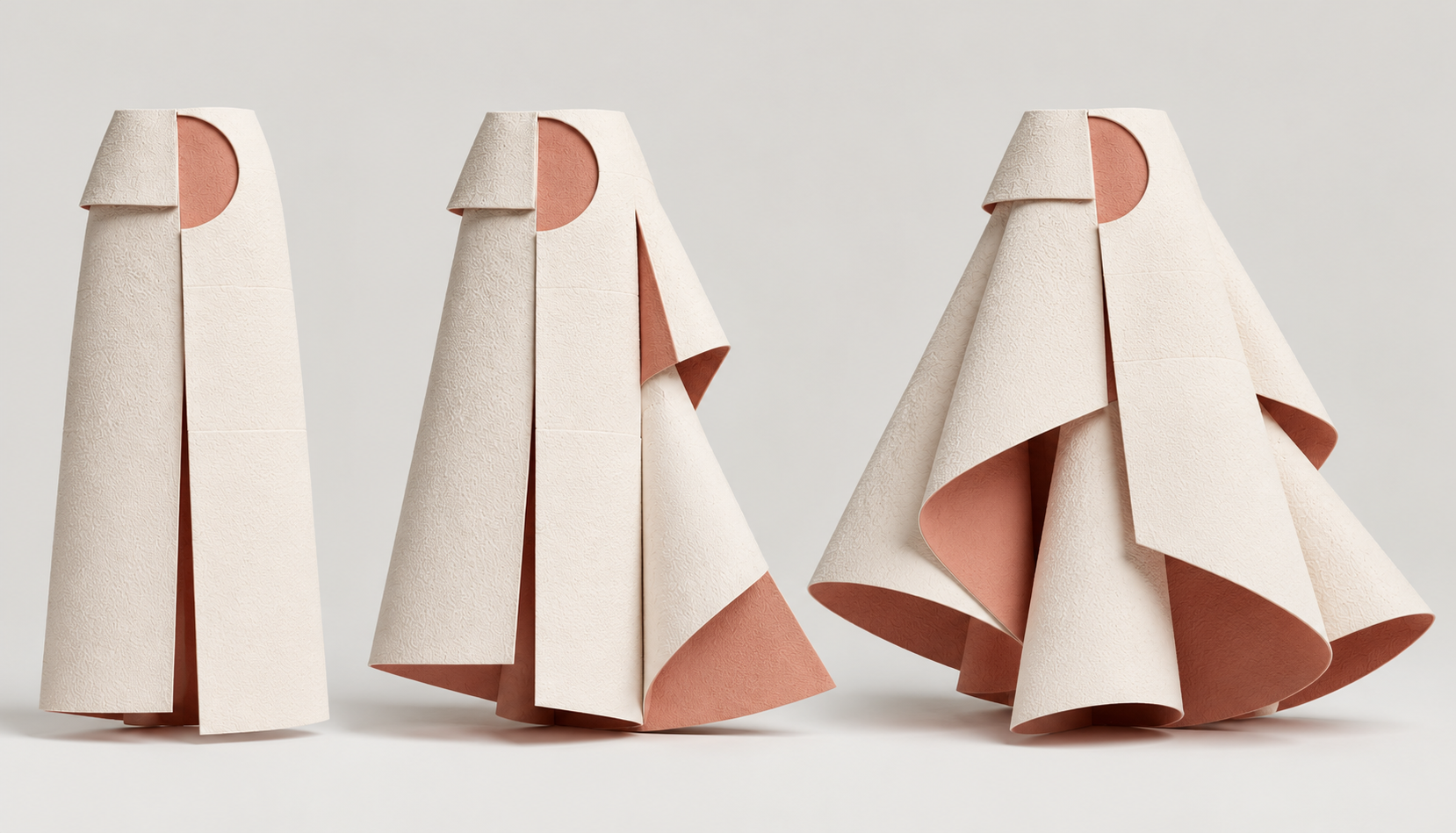
Now imagine transforming it: introducing a seam line, changing a proportion, adding fullness to part of the garment, creating asymmetry.
The visual result can change radically.
But transformation should not be a succession of arbitrary interventions on the pattern.
Every modification has consequences.
A change in fullness alters the relationship between fabric and body. A seam line changes how the parts are organised. A new distribution of volume may require a different approach to balance and fit.
The pattern maker must understand these relationships before deciding how to intervene.
This is where knowledge of the foundations becomes a design tool.
It is no longer simply a matter of knowing how to draft a construction.
It is a matter of knowing where to start, what to change and why.
From essential shape to complexity
A linear skirt can evolve into a geometric construction, articulated through panels, overlapping elements and asymmetrical volumes.
The final shape may appear far removed from the starting point.
But its realisation continues to require precise control of measurements, proportions and the relationships between the parts.
Visual complexity does not remove the need for a correct structure.
It makes it even more important.
For this reason, an essential construction should not be considered a lesser exercise than an elaborate design.
It is through fundamental constructions that the ability to recognise the consequences of a transformation is developed.
Complexity does not replace the foundations. It puts them to the test.
Digital tools do not change the principle
Digital tools have expanded the possibilities for developing and checking patterns.
Working in an environment such as CLO3D allows the relationship between two-dimensional construction and the three-dimensional representation of the garment to be observed.
A modification to the pattern can also be assessed through its effects on the simulated shape.
This makes the analytical process more immediate, but does not replace patternmaking expertise.
The software performs operations. Technical knowledge guides the decisions.
Without an understanding of the fundamental constructions, even an advanced tool risks becoming an environment in which work proceeds by trial and error.
With a solid methodological foundation, however, digital tools become a means of checking, comparing and developing technical solutions.
The point is not to choose between traditional and digital patternmaking.
It is to understand that construction principles must inform both.
When a Technical Error Becomes Visible
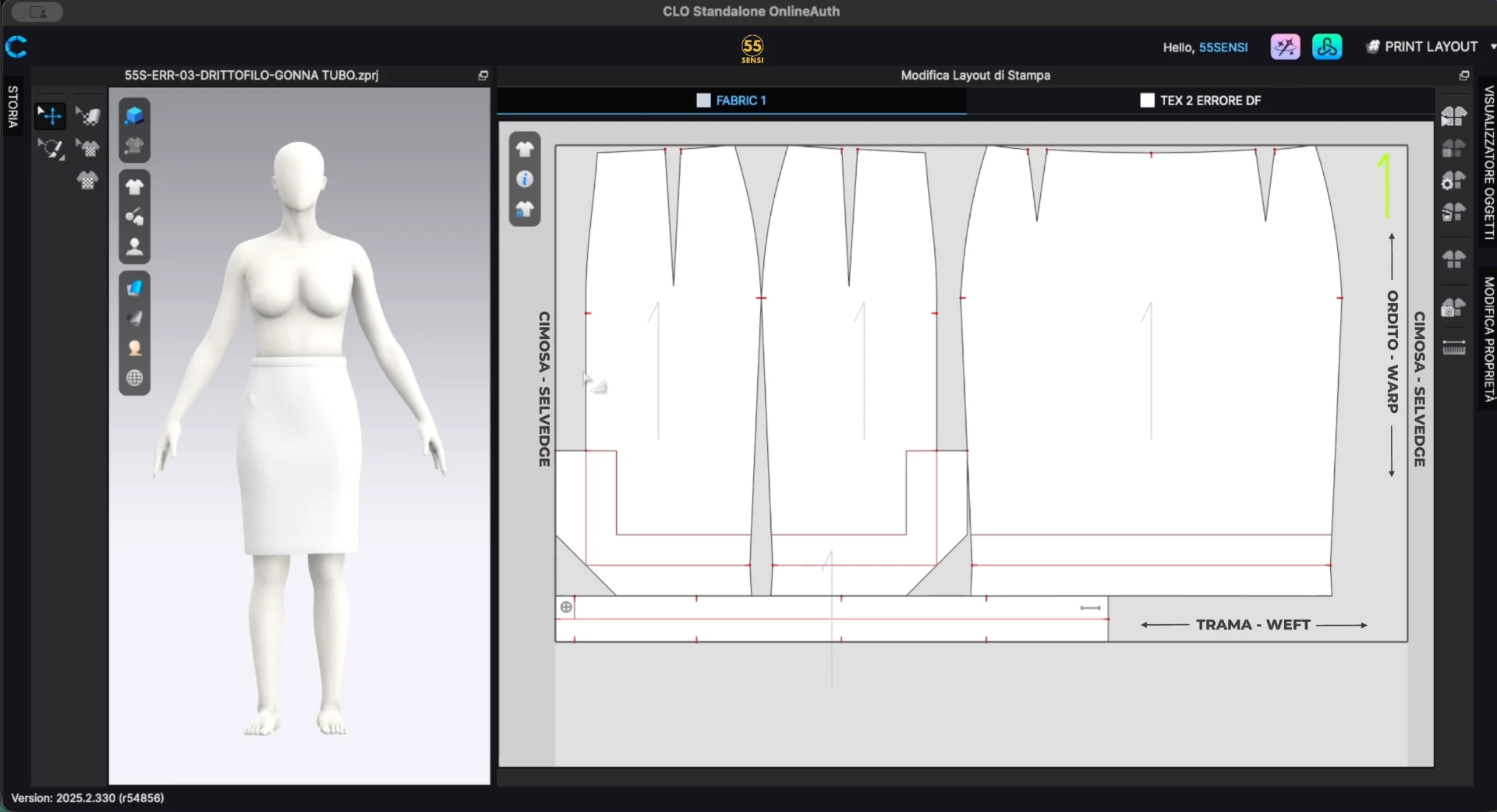
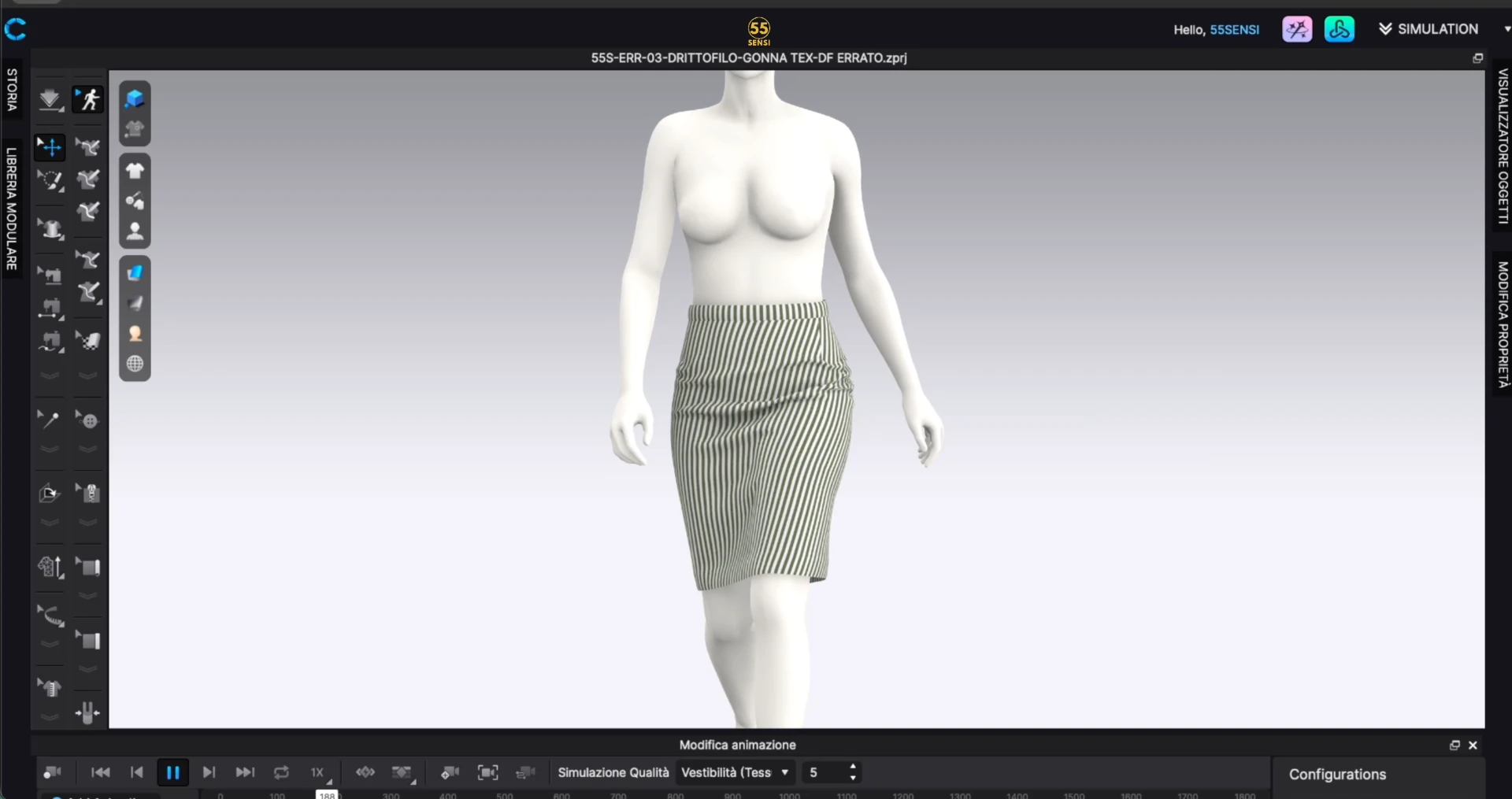
An error in grainline orientation can alter fabric behaviour and compromise the result of the garment. In a digital simulation, using a striped fabric makes it possible to observe how a decision that appears invisible in the pattern can manifest itself in the shape and movement of the skirt.
It is a concrete example of how digital checking can help identify a problem, while patternmaking expertise makes it possible to understand its origin.
Learning a foundation means learning to reason
In technical training, there is a substantial difference between correctly reproducing a sequence of steps and understanding their meaning.
Following a procedure can lead to the creation of a pattern.
Understanding that procedure makes it possible to address a new problem.
It is this second ability that becomes decisive when moving from fundamental constructions to the development of an original design.
The five skirt foundations therefore represent a starting point, not an end point.
Through them, principles are learnt that can be recognised, applied and explored further in different constructions.
Because the aim of training should not simply be to teach how to obtain a shape.
It should provide the tools to understand its construction.
The foundation as design freedom
A well-constructed pattern does not limit creative possibilities.
It provides a reference from which to develop them with awareness.
The better the rules of construction are understood, the more it becomes possible to transform them without losing control of the result.
This is the value of the foundations in patternmaking.
They are not shapes to repeat indefinitely.
They are knowledge to put to use.
The foundation is not the final design. It is the technical structure that makes it possible.
From knowledge to practice
The five essential skirt constructions are also the starting point for the Digital Patternmaking — 5 Essential Skirt Foundations training course at 55SENSI Academy.
A course dedicated to digital pattern construction in CLO3D, taking measurements and analysing the most common errors.
Explore the course at 55SENSI Academy →55SENSI — Turning ideas into products.