
55SENSI Knowledge · Case Study
From fashion illustration to pattern: How to construct a shape you do not yet know how to construct
Drawing a volume is immediate.Understanding how to make it exist on the body requires a method.
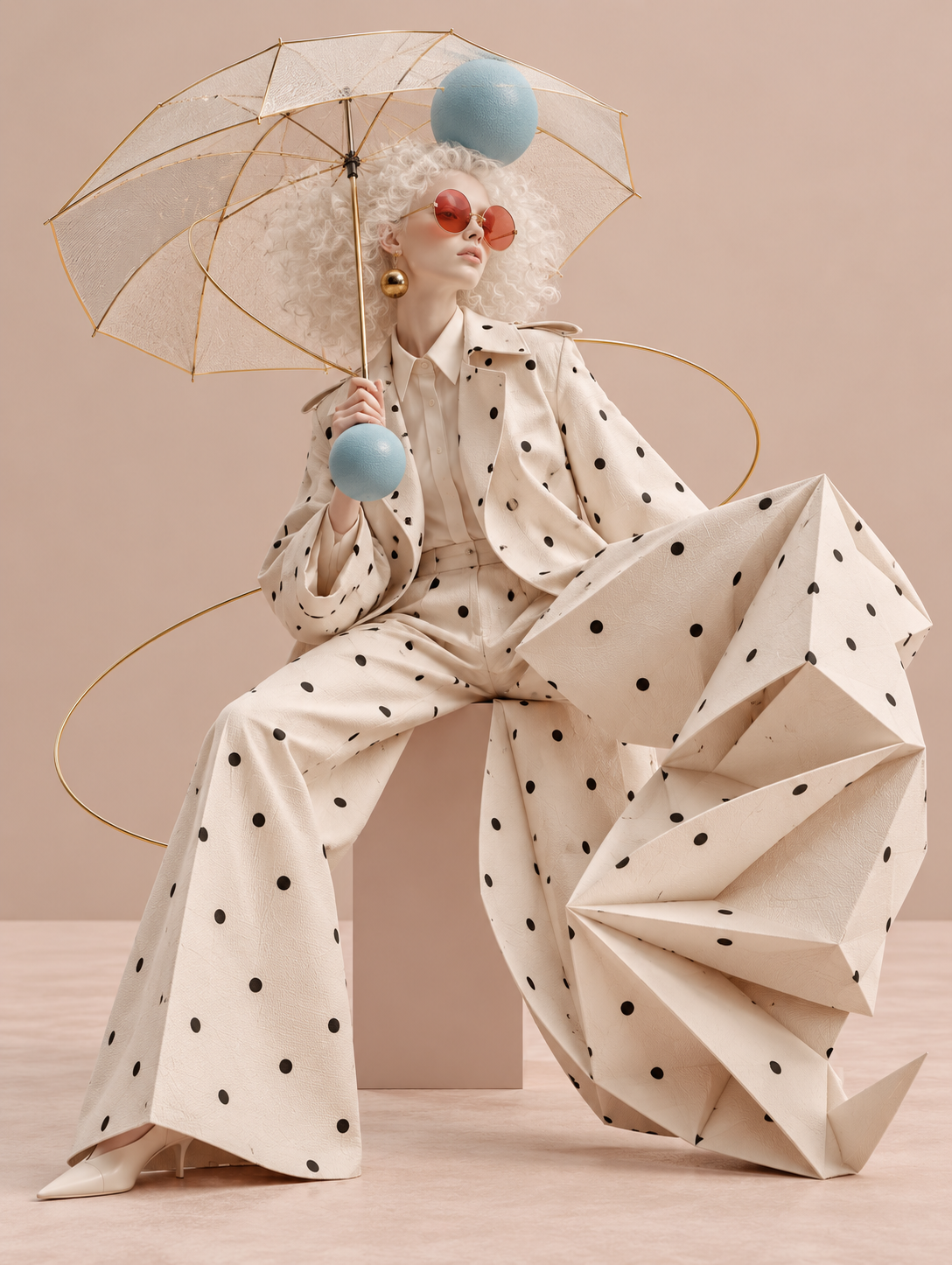
The design does not yet need to know how it will be constructed
When designing a collection, especially at the beginning of your journey, it is normal to imagine shapes that you do not yet know how to translate into a pattern.
And that is how it should be.
If every idea were limited to what we already know how to construct, technical knowledge would end up constraining the design instead of supporting it.
The problem comes later.
A line drawn on the fashion illustration can become a seam, a dart, a cut or simply remain an aesthetic mark.
A volume can originate from a pattern spread, a rotation, a fold, draping or the relationship between several parts.
On the page, we can imagine it.On the body, we must make it work.
And this is where product development truly begins.
Before asking yourself “how is it done?”, ask yourself “what am I seeing?”
When we observe a complex garment, the temptation is to look immediately for the solution.
How is it constructed?Where should I spread the pattern?How many centimetres should I add?
But these are premature questions.
First, we need to read the shape.
Where does the volume originate? In which direction does it develop? Where is it held? Which lines seem structural? What depends on the pattern, and what on the fabric's behaviour?
This completely changes the way we approach the problem.
Because the pattern is not simply a two-dimensional translation of a fashion illustration.
“It is one possible technical solution to a three-dimensional intention.”
Case Study / Dior
A fold can tell us much more than a fold
To test this reasoning, we chose a pair of Dior trousers characterised by substantial volume at the front and a distinctive teardrop-shaped draped fold.
We do not have the original pattern.
And this is precisely what makes the exercise interesting.
The aim is not to guess how the original garment was constructed.
The aim is to observe the result, formulate a pattern-making hypothesis and verify whether that structure can generate behaviour consistent with the observed shape.
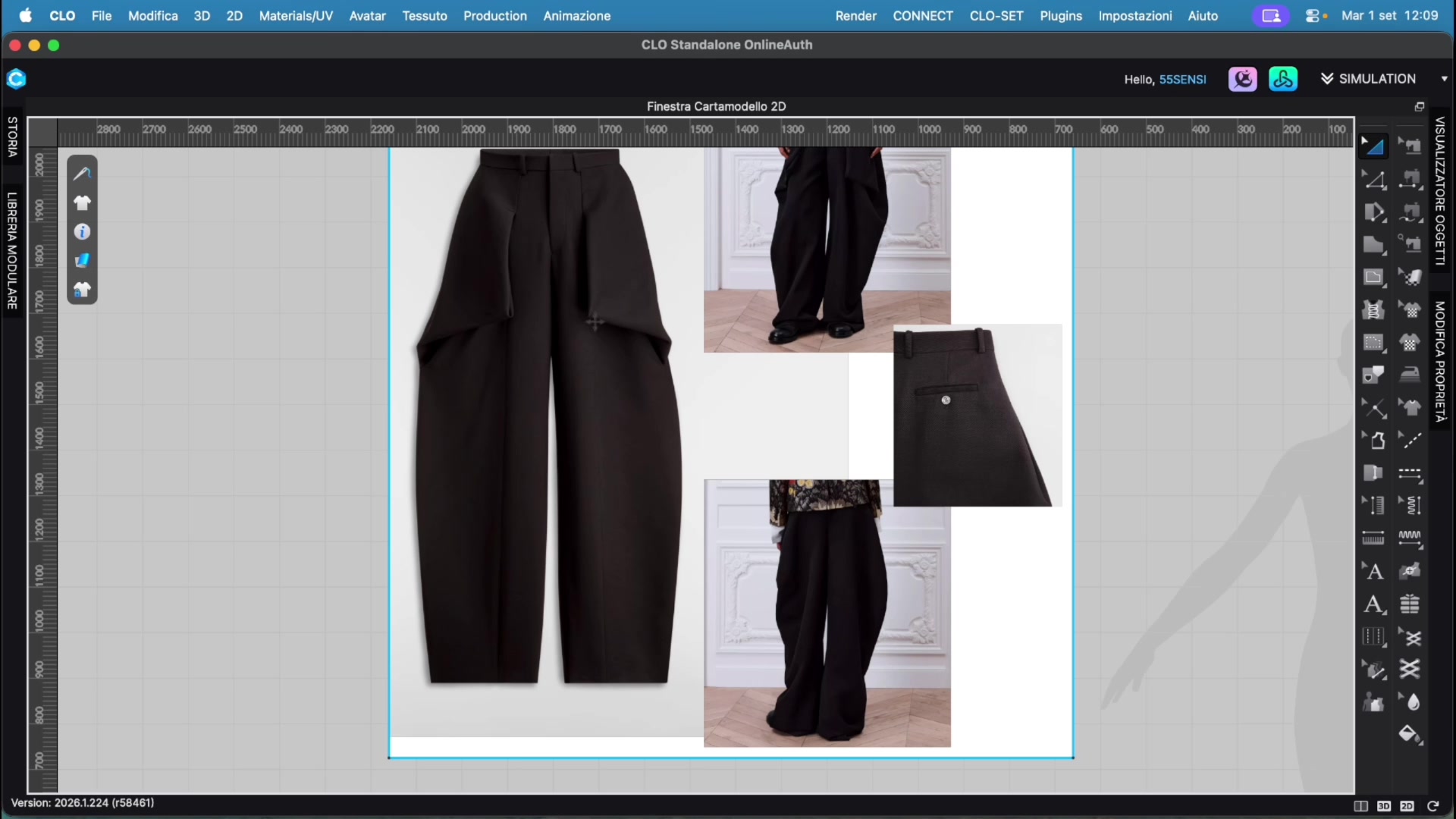
The same effect can arise from different constructions
This is one of the most important concepts in the exercise.
A visually similar shape can be achieved through different pattern-making solutions.
A dart can be transferred.A seam can change position.A fold can originate from a pattern spread.Part of the volume can be distributed across several points instead of being concentrated at just one.
This is why we are not looking for the Dior solution.
We are looking for a solution that works.
In our study, observing the trousers leads us to question the traditional side construction and work on the relationship between front, back, dart and fold volume.
This is where the transformation begins.
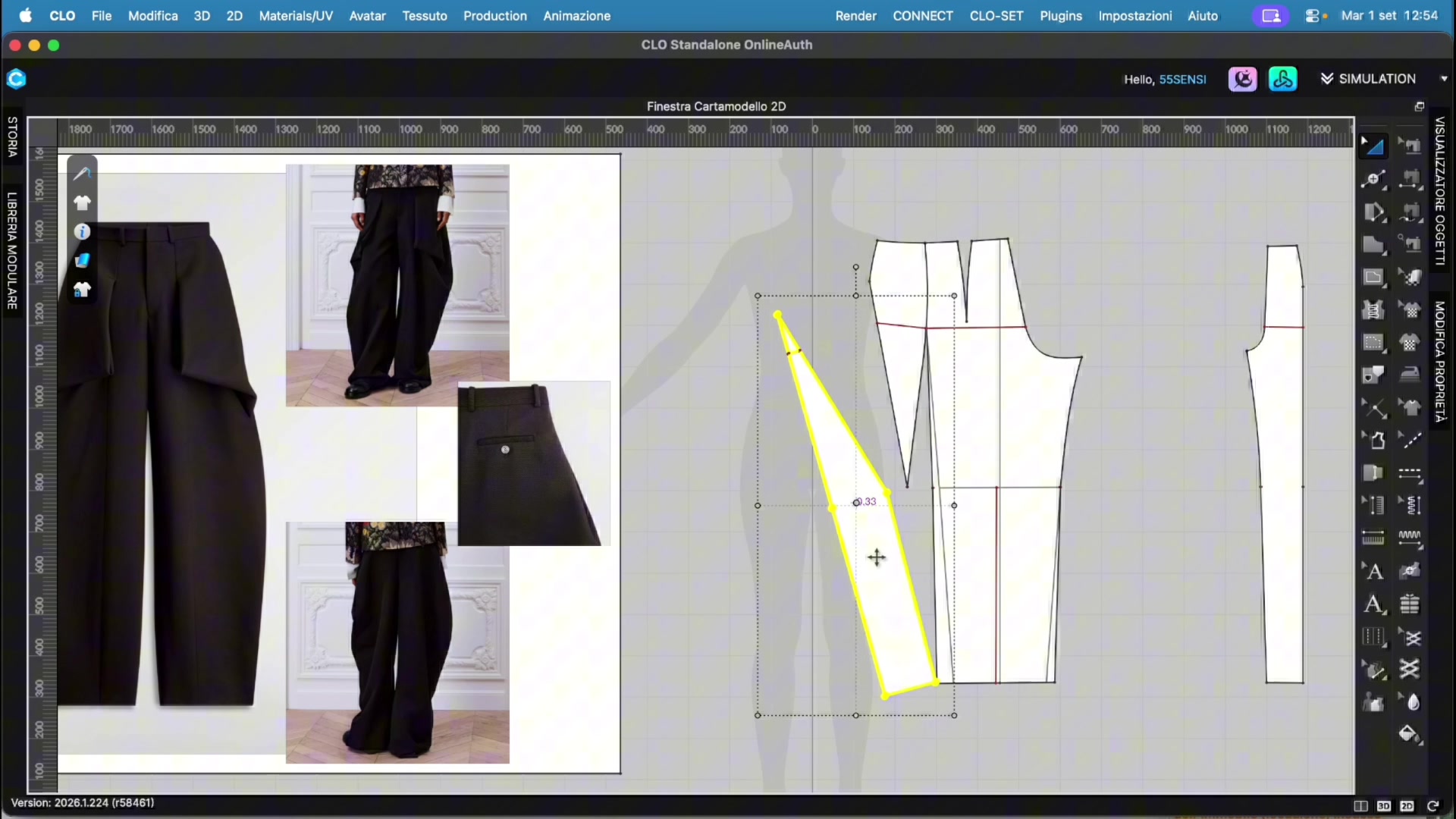
Do not add volume.Decide where it needs to go.
To achieve a substantial fold, simply adding fabric is not enough.
In our development, approximately 52–53 cm of total pattern spread is required.
But spreading the pattern at just one point would also affect areas that we do not want to modify in the same way.
The transformation is therefore distributed and controlled.
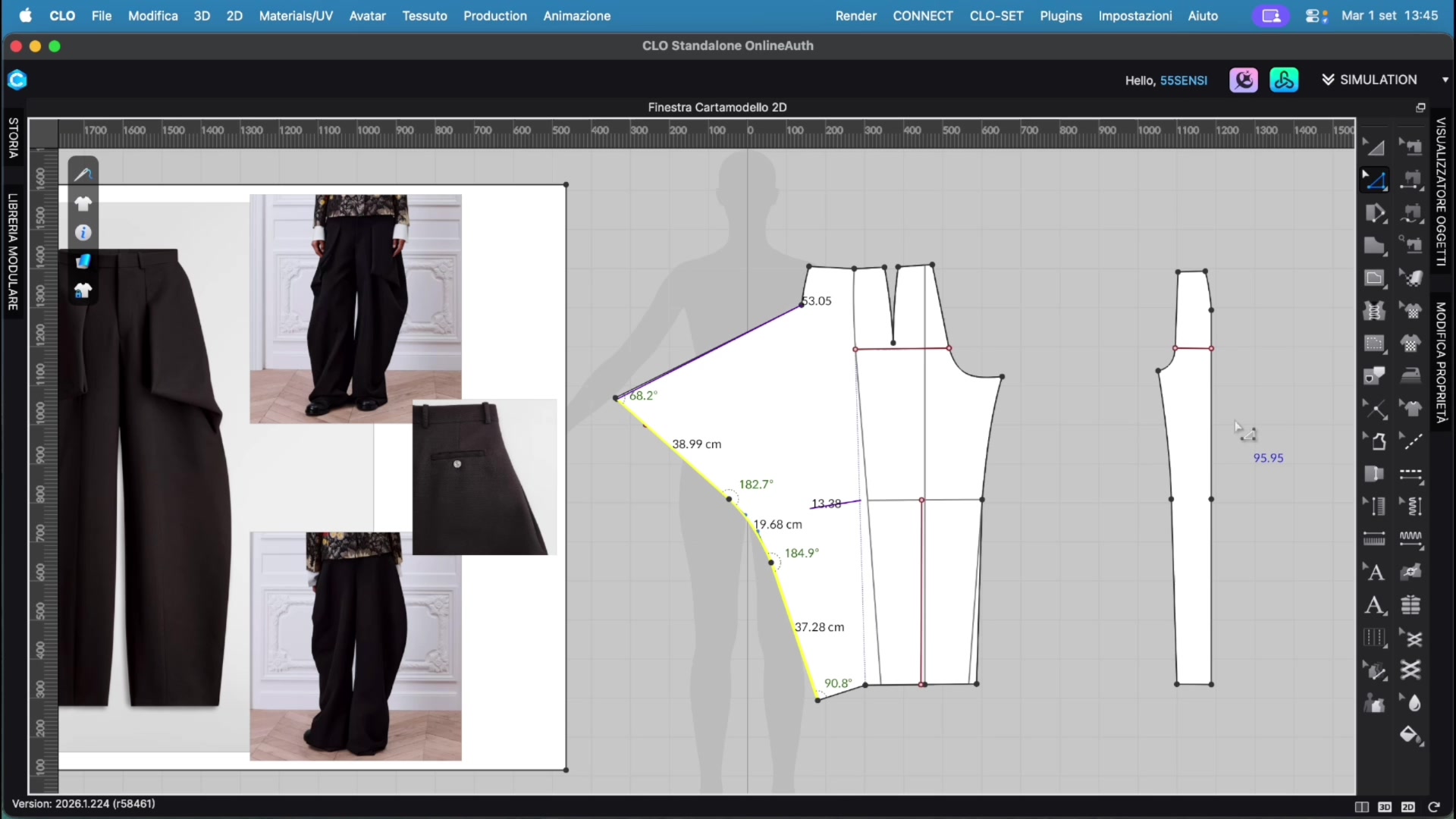
The aim is not simply to obtain more width.
It is to understand where that width needs to produce shape.
Volume is not a quantity.It is a direction.
The first attempt does not have to be the right one
This is where the process becomes particularly interesting for those who are learning.
We construct our hypothesis and bring it onto the digital body.
The shape begins to appear.
But it does not yet work as it should.
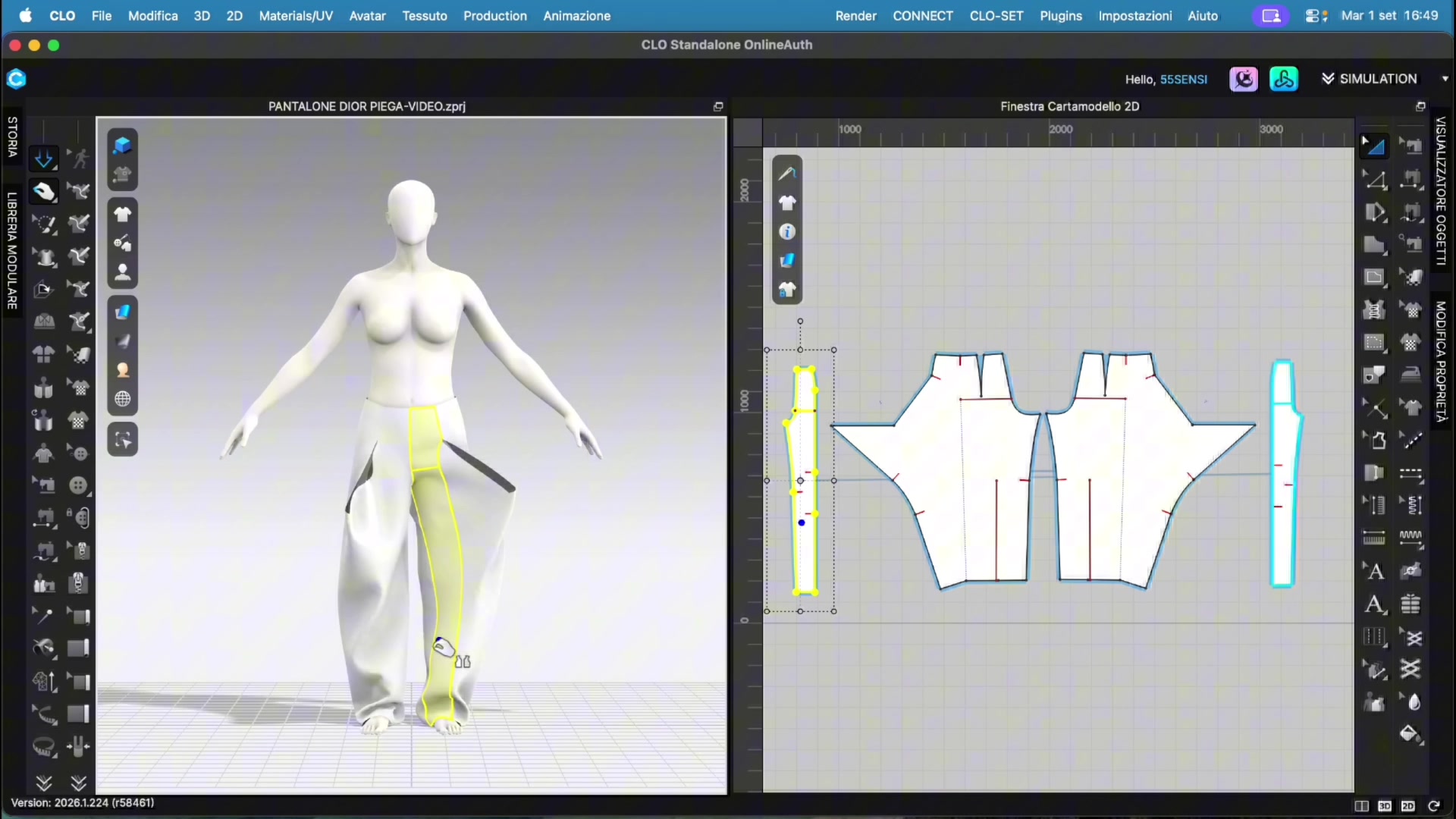
The gore is too stiff and the volume tends outwards.
We could consider it an error.
Or we can consider it for what it really is:
Information.
The simulation shows us a consequence of the decision made in the flat pattern.
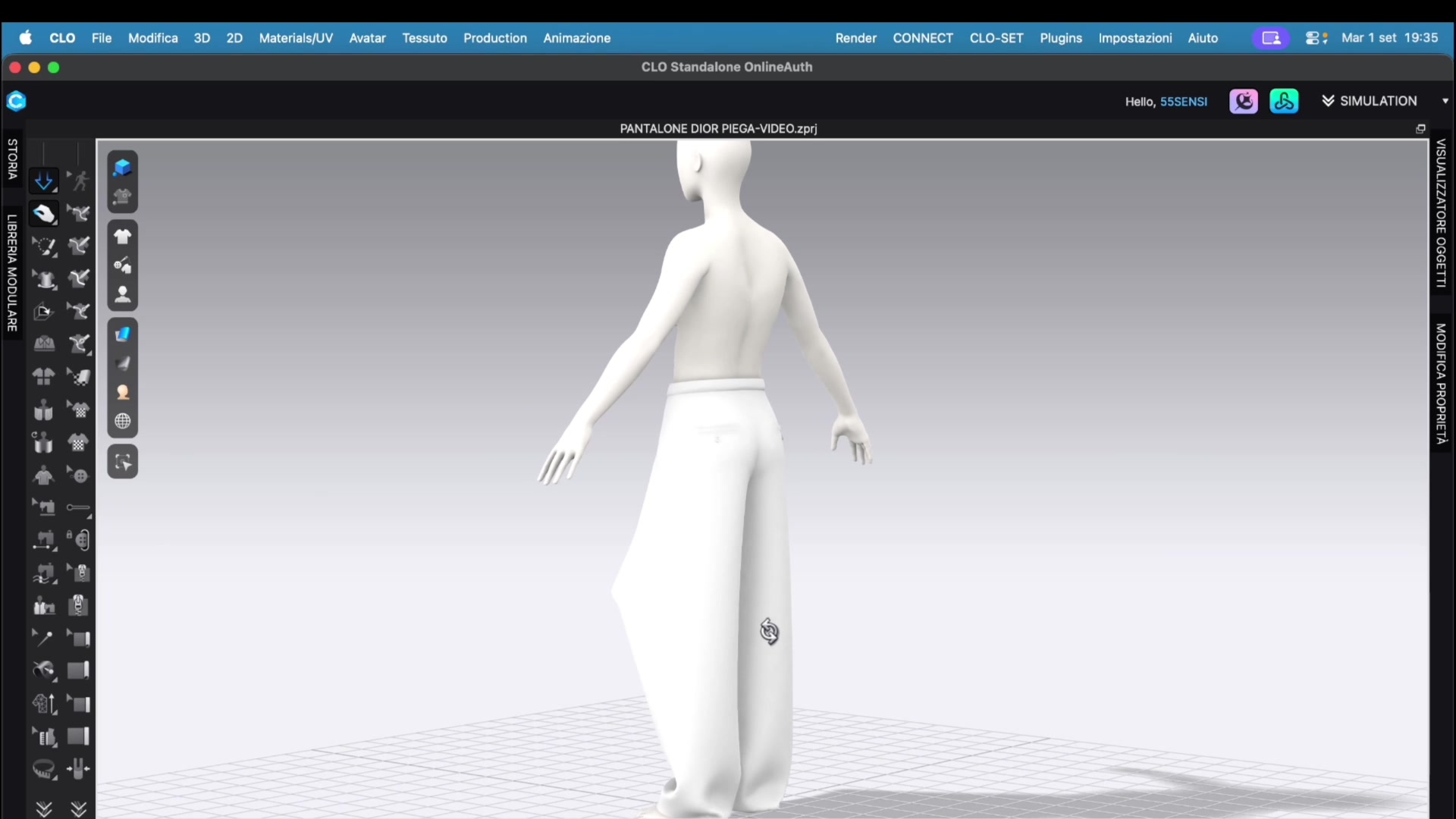
We therefore return to the pattern, adjust the geometry, check the relationships between the parts again and simulate once more.
- Design
- Verify
- Observe
- Correct
- Verify again
This is the point where 3D stops being simply a visualisation tool.
It becomes a decision-making tool.
Watch the complete process
Dior trouser pattern: how to construct the teardrop-shaped draped fold | CLO3D
In the video, we show the complete process: from reading the style to transforming the pattern, from constructing the fold to simulation and subsequent corrections.
Watch on YouTube ↗Software cannot understand the garment on your behalf
There is another thing that this exercise makes clear.
To simulate a garment correctly, knowing the software commands is not enough.
You need to understand how that garment could actually be constructed.
Which part goes over the top?Which remains underneath?How is a fold formed?In what order are the elements assembled?How does the behaviour change when we introduce a waistband, fastenings, overlaps and seams?
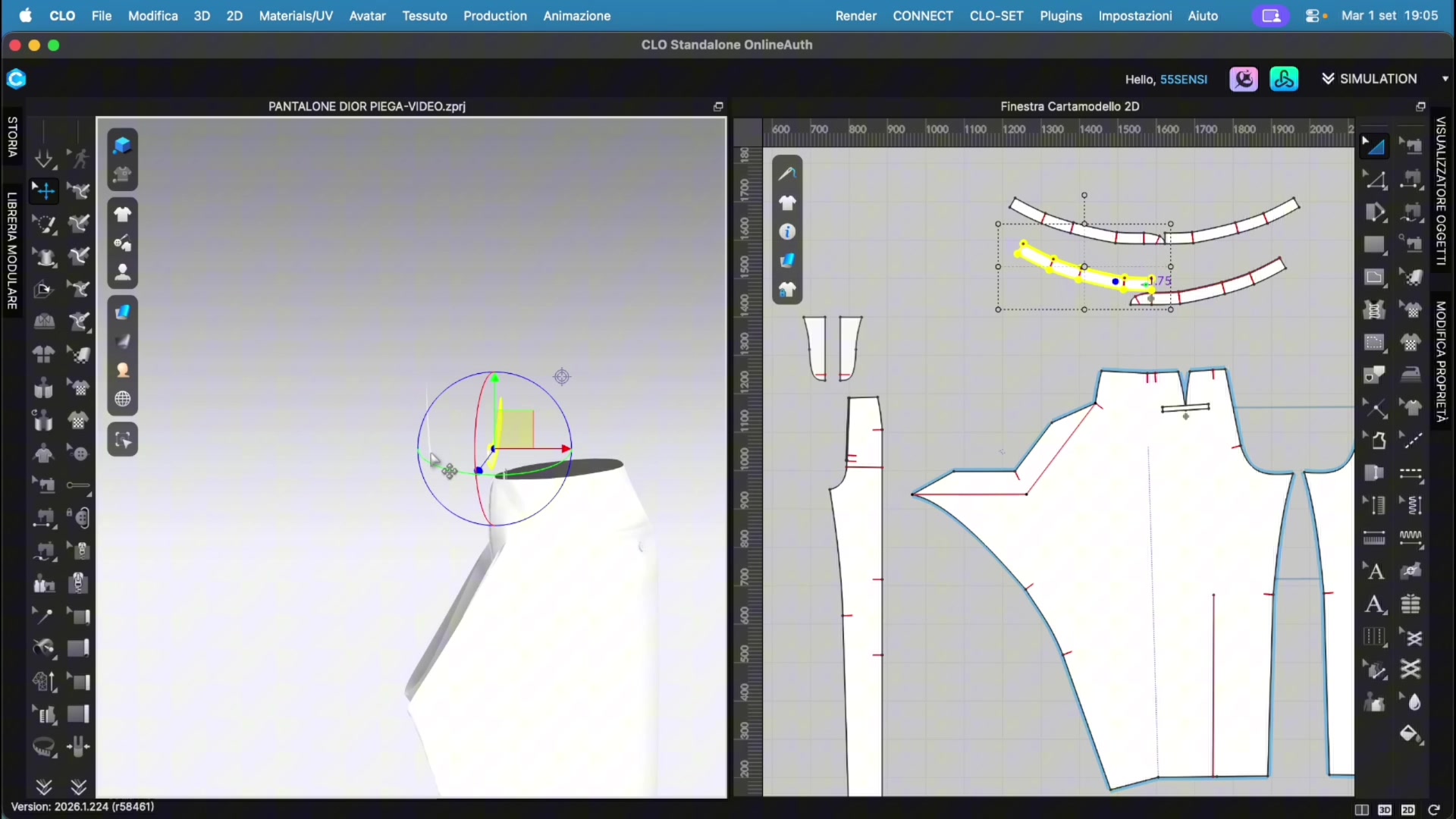
Digital technology does not eliminate this knowledge.
On the contrary, it makes it even more evident.
This is why, at 55SENSI, 3D is neither the starting point nor the final result.
It is one phase of a broader process:
- Observe
- Interpret
- Construct
- Verify
- Correct
If you study fashion, do not look for the tutorial immediately
Choose a garment that interests you but that you would not know how to construct today.
Before looking for the tutorial, stop.
Look at it and try to answer five questions.
- 01Where does the volume originate?
- 02In which direction does it develop?
- 03Where is it held, absorbed or released?
- 04Which lines could have a structural function?
- 05Which transformation in the flat pattern could generate that shape on the body?
Then formulate a hypothesis.
Draw it. Construct it. Verify it.
And accept the possibility that the first solution will not work.
Because the aim is not to guess the pattern used by the designer.
It is to learn to think like a designer.
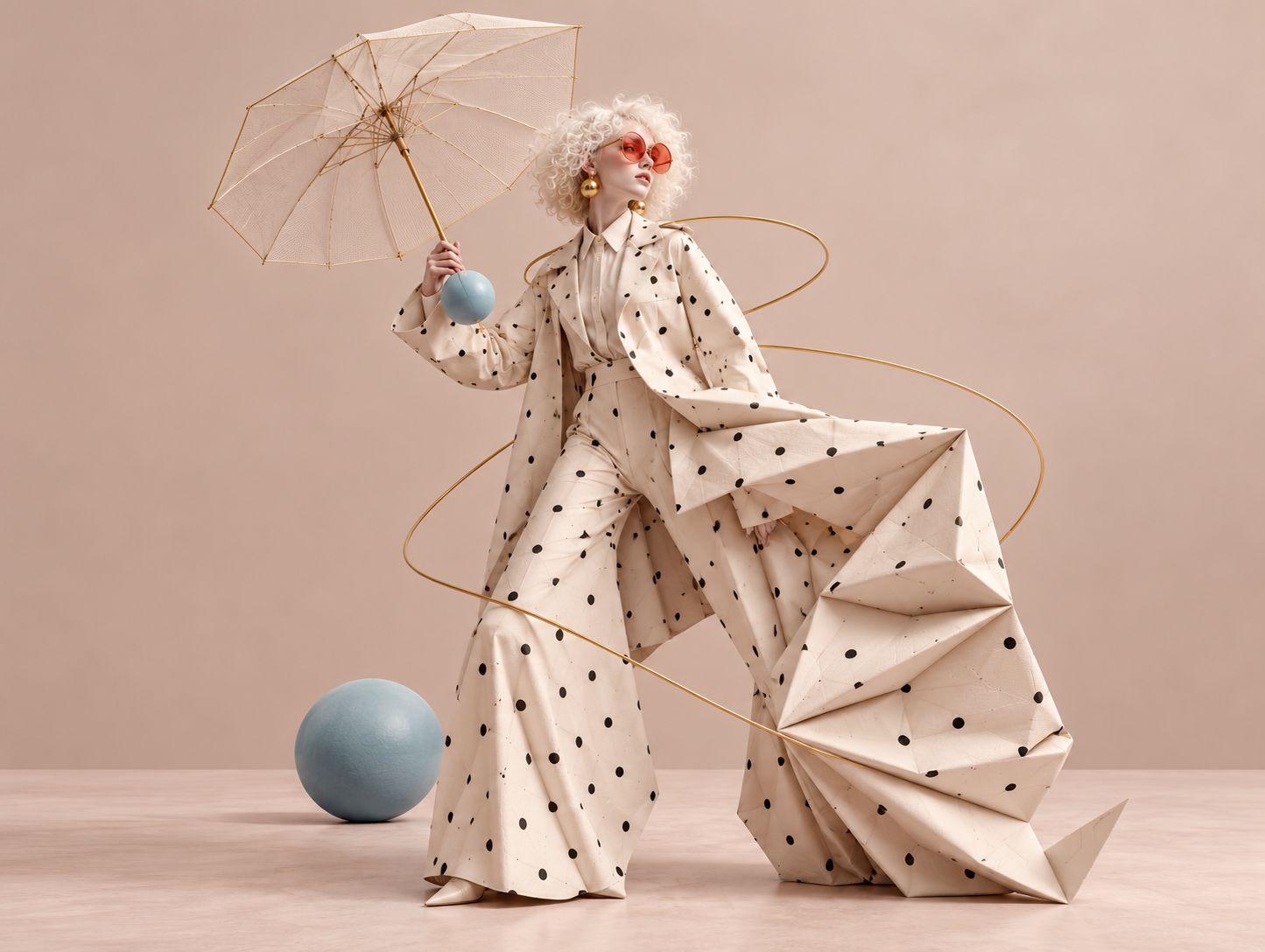
And when the garment to be constructed is your own?
The exercise changes completely.
With an existing garment, you can observe a shape that has already been realised and try to understand its logic.
With your own fashion illustration, however, that solution does not yet exist.
It must be found.
And this is often the most difficult step when tackling your first projects: transforming a silhouette, a volume or an intuition into something that can actually be developed into a pattern, verified, prototyped and worn.
It does not mean giving up on the idea because it seems difficult to construct.
It means finding the process capable of turning it into a product.
You have designed your garments.Now they need to work in practice.
Are you developing your first collection, a personal capsule or the garments for your end-of-course fashion show?
55SENSI can support your transition from idea to product through project analysis, pattern making, 3D development and prototyping.
The project is yours.Let us construct the process to realise it together.
Would you like to learn the method instead?
Discover 55SENSI Academy →