

You've finished school. What goes on your CV?
Your first CV in fashion, and the work you can already show.
- Author
- 55SENSI
- Date
- 17 November 2026
- Reading time
- 4 minutes
You’ve just finished school. You open a document, type your name, add your diploma and the software you know how to use. Then you reach the “Work experience” heading and stop. The job advert in front of you is looking for a junior with one year’s experience. You are looking for exactly the place where you can gain that year.
When replies are slow to arrive, it’s easy to read that almost empty page as a verdict on what you can do. Yet part of the work you have already done is missing from it too. To find it again, it’s worth reopening the folder of your end-of-course projects.
A finished jacket shows only part of the work
At school you made a jacket, and in your portfolio you included a photograph of the finished garment. At the first fitting, however, the sleeve was pulling. You observed how it hung, checked the relationship between the sleeve head and the armhole, and revised the pattern with your tutor. Then you fitted it again.
Anyone who sees the photo knows how the jacket turned out. To understand how you work, they need more information. The photo of the first fitting, a detail of the corrected pattern and two lines about the alteration show how you tackled a problem you might also come across in a studio.
If you want to join a product office, you can give more space to the technical sheet you prepared, with its measurements and construction details. For a 3D role, you can show a simulation and explain what you checked. Starting from the same garment, you can present different aspects of your work, depending on the role you are applying for.
On your CV, a section for projects
Below your qualification, choose two or three relevant projects. State the context in which you completed them, which stages you were responsible for and where they can be seen in your portfolio.
Double-breasted jacket · End-of-course project
Pattern development from the assigned fashion illustration, making the toile and revising the sleeve during the fitting with the tutor. In the portfolio: photo of the first fitting and detail of the corrected pattern.
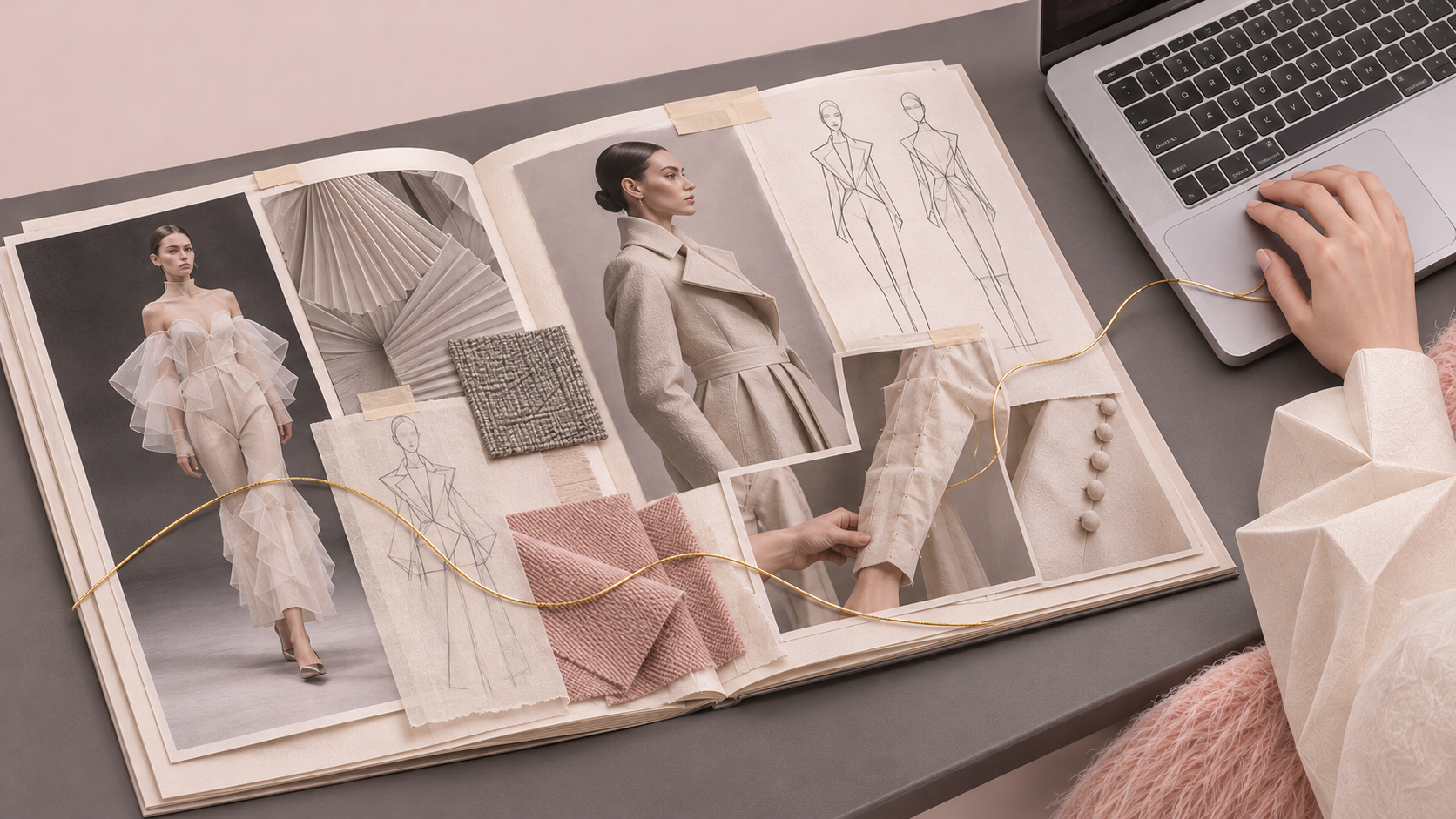
If it was a group project, specify your contribution. If you worked from a block provided by the school, say so. Adapting a block to a fashion illustration is a specific skill, and the reader may ask you how you did it.

Those who hire have their part of the work too
In a studio there are delivery deadlines, people to discuss things with and changes that arrive when the design is already well under way. These are aspects of the craft that are also learnt by working alongside people who know them.
At an interview for a junior role, looking at a project together can help work out where to begin. What did you notice at the first fitting? How did you decide which correction to make? The answers help the person hiring understand what you can already do and where you will need guidance.
From School to Studio
From School to Studio is 55SENSI Academy’s three-month programme for people who have completed their fashion studies and want hands-on practice in developing a garment. The group has a maximum of three participants.
You start from a brand’s brief and follow the project through to the fitting in the atelier. Patrizia Valentini works alongside you on moulage and building volume, Francesca Fiorentini on CAD pattern development and the technical sheet, and Emylia Scaccia on paper patternmaking, prototyping and garment making at SPAZIO 2.0.
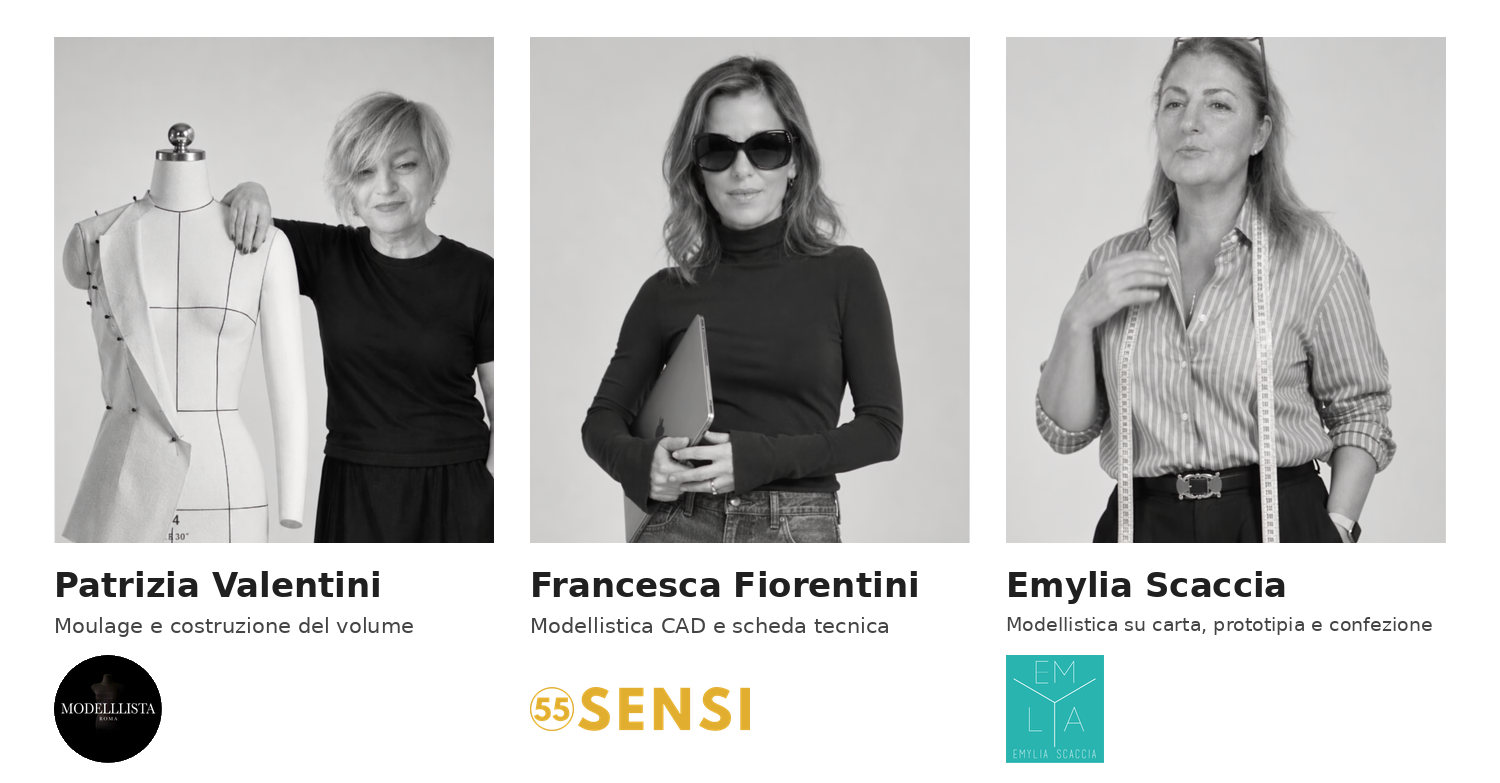
By the end, you will have a project to show at interviews, with fittings and corrections you can talk through. The programme includes a private certificate of participation and individual feedback on the work you have completed.
For information about the programme, write to contact@55sensi.com.