
When value is there, it does not need to justify itself
- Author
- 55SENSI
- Date
- 17 October 2026
- Reading time
- 9 minutes
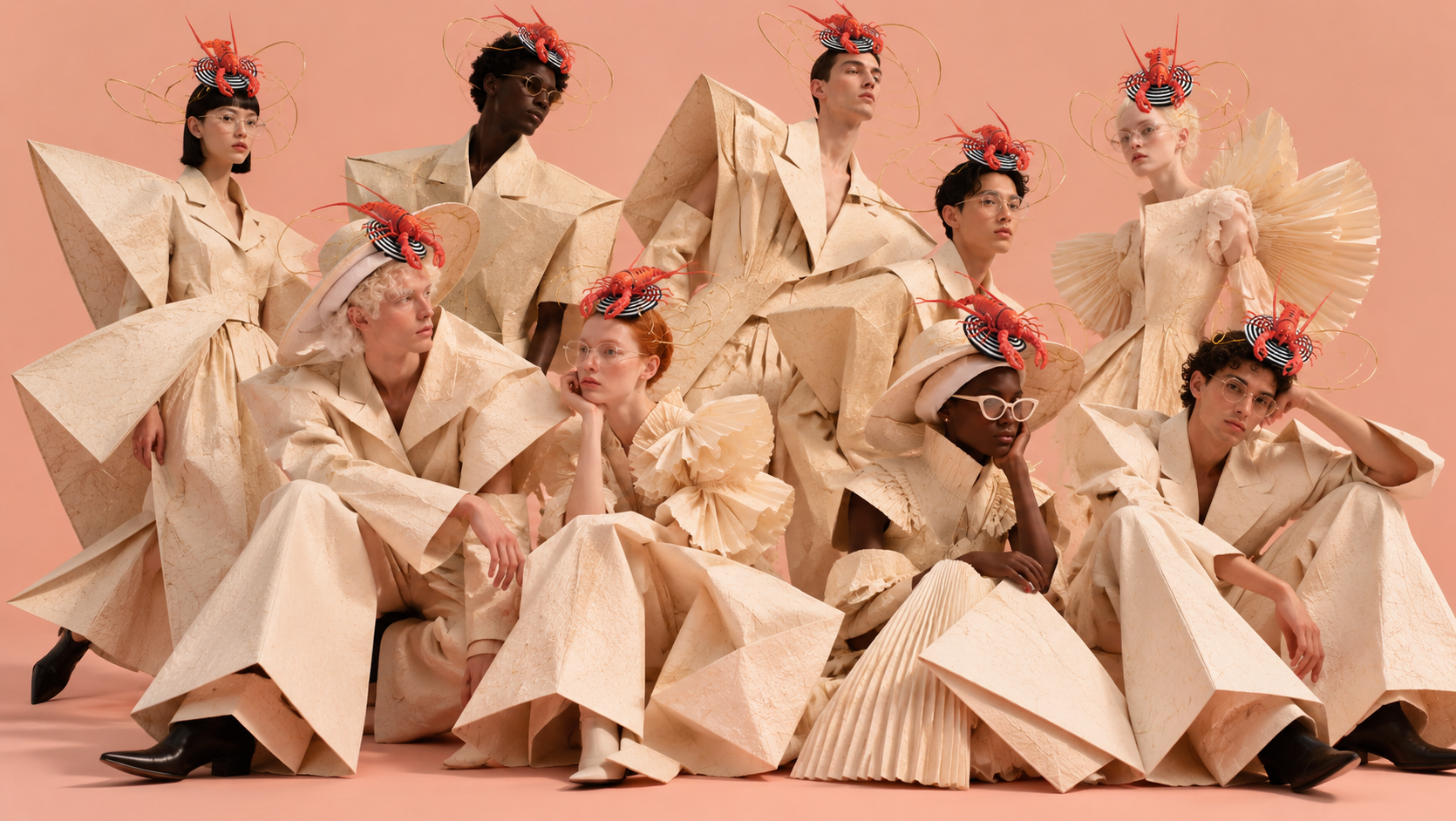
The crisis of part of contemporary luxury and the strength of niche premium tell the story of two profoundly different ways of building value. On one side, the need to feed desire. On the other, the need to achieve a result.
One hundred euros well spent. Fifty euros badly spent.
There are restaurants where we spend one hundred euros on dinner and leave happy.
We ate extremely well, the service was impeccable, everything seemed to be exactly in its place. We did not need to know the chef, to know how many trials were needed to create a dish or which techniques were used.
We simply lived an extraordinary experience.
And those one hundred euros do not weigh on us.
Then we happen to go to another restaurant. We spend fifty euros, half as much. We eat without any particular satisfaction, the service is ordinary, nothing surprises us.
We leave thinking that eating out has simply become too expensive.
It is curious, when you think about it.
We spent less, yet we feel we paid too much.
In the first restaurant, on the other hand, we did not even feel the need to justify the expense.
Because the problem was not the price.
It was the value received.
And there is another interesting element.
The first restaurant is full. People book, wait, come back. They have not all studied gastronomy, they do not necessarily know the chef's techniques and they do not share the same tastes.
And yet, they recognise something.
The quality of the result reaches them.
It does not need to be explained to be experienced.
When the price stops telling the story of value
For a long time, luxury built its strength on a particular balance: product excellence, desirability and brand prestige.
The name represented a promise. Behind that promise there were skills, research, materials, manufacturing processes and a product culture that helped justify its exclusivity.
But what happens when this balance shifts?
When prestige begins to sustain the price more than the product is able to sustain the prestige?
Part of contemporary luxury seems to be confronting precisely this question.
Brand recognisability, the strength of communication and the ability to generate desire can become so central that they risk drawing attention away from the object itself.
The product remains desirable because it belongs to a particular universe.
But is the experience it offers still equal to what it promises?
This is where the relationship with the consumer can crack.
Not necessarily because the price is too high in absolute terms.
But because what is received no longer returns, with the same intensity, the expected value.
As with the fifty-euro dinner, the price suddenly becomes the protagonist.
And when we continually have to explain why something is worth so much, perhaps it is worth looking again at what we are actually offering.
Niche is not born to be an alternative
At this point, it would be easy to describe niche premium as the answer of those who do not possess the notoriety of the great brands.
But that would be a mistake.
Niche is not a smaller luxury. It is not a second chance for those who failed to become famous. And it is not necessarily born from the will to occupy a space left free by the market.
Its origin can be completely different.
Some people begin a piece of research because they have something in mind they want to create.
A shape. A balance. A particular construction. A material to explore. A solution that does not yet exist in the desired form.
It does not necessarily start from an audience, a price or a recognisability strategy.
It starts from a necessity.
Something that keeps returning, that asks for attention, that does not allow you to settle.
A kind of inner noise.
Those who hear it keep experimenting, modifying, observing and starting again.
Not to prove they are different.
Not to seek approval.
But because the result is not yet the right one.
Research is not about building an image of yourself.
It is about reaching what you are looking for.
Perfection as a personal criterion
There is a particular moment in every piece of research.
It is the moment when a result, while already good, is not yet enough.
Something is not convincing. A proportion could be different. A material does not return exactly the desired effect. A construction works, but not in the way it was imagined.
From the outside, the work might appear finished.
For the person creating it, however, something is still missing.
And it is precisely this distance between the result obtained and the result sought that keeps the experimentation going.
Validation happens there first of all.
Not in the eyes of others, but in the continuous comparison between what you want to achieve and what you have actually made.
Perfection, in this context, is not an abstract or universal standard.
It is the point at which the person conducting the research finally recognises in the result what they were looking for.
This does not mean that the result cannot be developed further or that it is beyond any judgement.
It means that it has reached its own completeness in relation to the intention that generated it.
And when this happens, something changes.
The product no longer needs to be modified to approach the idea.
It has become that idea.
Quality is transferred
Let us return to the restaurant.
Behind an extraordinary dish there can be years of experience, dozens of trials, selected ingredients, errors, corrections, intuitions and continuous research.
But none of this reaches the table in the form of an explanation.
It arrives in the form of an experience.
Those who eat do not have to retrace the chef's work to appreciate the result.
The complexity of the research has transformed into something immediate.
A flavour. A balance. A texture. A feeling of completeness.
The same can happen with an object, a garment, a piece of furniture, an experience designed with care.
You do not need to know the construction technique of a jacket to perceive how it fits.
You do not need to have studied materials to sense the quality of a fabric.
You do not need to know the journey of whoever created an object to be struck by its presence.
The work does not disappear.
It manifests itself through the result.
And when more people encounter that same quality and draw satisfaction from it, the value begins to be recognised even outside the research that produced it.
Not because that was the initial purpose.
But because what has been made manages to give something back to those who experience it.
Recognition is a consequence
Here lies perhaps the most interesting difference between research guided by the result and production guided predominantly by the need to feed desire.
In the first case, the work seeks its validation in the quality achieved.
In the second, it risks seeking it in the market's response.
Naturally, every business must reckon with its audience, with economic sustainability and with the need to sell.
Research does not remove these responsibilities.
But there is a difference between listening to the market and letting the market continually determine what is worth creating.
Those who conduct niche research can reach a result without yet knowing how many people will desire it.
Their criterion of satisfaction has already been exercised during the process.
If that result then meets an audience, arouses interest and is chosen, recognition arrives as a consequence.
It is not what gave rise to the research.
It is what can happen when that research meets others.
And this distinction changes the very meaning of success.
A product does not necessarily acquire value the moment it becomes famous.
It can possess that value before anyone knows it.
Notoriety can amplify its diffusion; it cannot retroactively determine its quality.
The quiet strength of niche premium
Niche premium finds one of its most interesting expressions precisely in this relationship between research and result.
It is not defined simply by a high price, by limited production or by the choice of addressing a few.
These can be effects or characteristics of its production model.
But they do not necessarily explain its origin.
Its centre can be the will to carry a piece of work to the desired level of quality, even when this requires time, experimentation, difficult choices and the renunciation of more immediate solutions.
Quality is not added at the end to make the product more desirable.
It is what guides the decisions from the very beginning.
And when the result reaches a particular intensity, it can develop a strength of its own.
It does not necessarily need to be accompanied by a grandiose narrative.
It does not have to explain continually how much work was required.
It does not have to ask for indulgence because it was made by a small or little-known structure.
It presents itself for what it is.
And it meets people who recognise its value through what they receive.
It is the same reason why an extraordinary restaurant can keep filling up despite high prices.
People do not return to reward the chef's effort.
They return because they want to live that experience again.
Value is not recognised out of respect for the work done.
It is recognised for what that work has managed to generate.
Luxury can rediscover what made it great
This reflection does not necessarily lead to an opposition between luxury and niche.
On the contrary.
Many of the great maisons were born precisely from personal research, from a precise vision, from a particular way of conceiving shape, construction and quality.
Before becoming symbols recognised around the world, they were places of experimentation.
Their prestige was also built through results capable of leaving a mark.
The question, then, is not to establish whether luxury is better or worse than niche.
It is to ask what happens when a structure born from research begins to depend above all on the need to feed its own image.
And whether it is possible to rediscover the original relationship between what is created and the value it manages to express.
Niche does not automatically possess this capacity, just as luxury has not necessarily lost it.
But research that preserves its autonomy reminds us of something essential: value cannot be replaced indefinitely by the narrative of value.
A brand can make a product recognisable.
Communication can make it desirable.
The price can place it in a particular market segment.
But it is what the product returns in the experience that makes that promise credible over time.
When value is there
Perhaps we should return more often to that one-hundred-euro dinner.
Not to celebrate the high price, but to remember how different the feeling of spending is from the feeling of receiving value.
In that experience we did not worry about justifying the cost.
We did not ask the chef to demonstrate their competence to us.
We did not need to know the journey that had led them to that result.
We recognised the quality through what we lived.
And this is the most interesting encounter between those who create and those who receive.
On one side, someone who kept searching until they reached the desired result.
On the other, someone who encounters that result and experiences its value.
Two different paths that meet in the same object, the same dish, the same garment.
The research did not need our recognition to exist.
But its result managed to reach us.
Quality was sought for its own sake.
The value reached others.
And perhaps this is the greatest strength of niche: not having to be born from the desire to be recognised, but being able to become recognisable through what it manages to create.
Because when value is truly there, it does not need to be continually justified.
It manifests itself.
55SENSI
Turning ideas into products.